



A Quick Start Before We about Different Types of Cranes Used in Construction
If you have ever watched a crane lift something that looks way too heavy to move, you probably had the same thought most people do: “How is that even possible?”
Cranes are one of the coolest parts of construction. They are also one of the easiest places for things to go wrong if training, planning, or communication gets sloppy. At Crane Training Academy, we speak with new operators, experienced crews, and company owners all the time. People want better skills, better pay, and safer lifts. A lot of them start looking for Swing Cab Crane Operator Training in Laguna Beach once they realize crane work is not just pushing controls. It is judgment, teamwork, and calm decision making, especially when a lift has no room for error.
Different Types of Cranes Used in Construction are:

Why Construction Needs More Than One Crane
A fair question comes up a lot. “Why do construction companies use so many different cranes?”
Because no two job sites look the same. Some jobs need serious height. Some need heavy lifting close to the crane. Some need long reach. Some need a crane that can roll down the road and start working fast. Some need a crane that can sit on soft ground without sinking. Some need a crane that can lift across water.
If construction were always flat, clean, and wide open, crane selection would be simple. But construction is rarely any of those things.
So the industry uses different crane types for different problems. Each crane has a sweet spot. When crews use the right crane, the job runs smoother. When they use the wrong crane, the job turns into a slow headache.
Mobile crane
Mobile cranes are the most common cranes on most job sites. They show up, set up, lift, and move on. They are popular because they save time. Mobile cranes are also the type most people see first, which is why many new operators start here.
What makes mobile cranes so useful?
Mobile cranes are built for flexibility. They handle a wide range of lifts, and they can move from one job to the next without a major breakdown and rebuild process.
What makes mobile cranes so useful?
Mobile cranes are built for flexibility. They handle a wide range of lifts, and they can move from one job to the next without a major breakdown and rebuild process.
Where mobile cranes show up most
Mobile cranes are common on:
- Commercial construction
- Road and bridge work
- Utility installation
- Light industrial jobs
- Residential projects with heavy materials
Mobile cranes come in several styles, and the next few sections break those down.

Tower Crane
Tower cranes are the tall cranes you see rising over city skylines. They are designed for height, reach, and long term projects. Tower cranes are not quick to install. They are not casual equipment. But once they are up, they can do work that other cranes simply cannot.
Why tower cranes are different
Tower cranes stay in one place. They do not drive around the site. The building grows around them, and the crane keeps feeding the job materials day after day.Where tower cranes make the most sense
Tower cranes are common on:- High rise buildings
- Large commercial projects
- Dense city construction
- Long duration builds

Rough Terrain Cranes
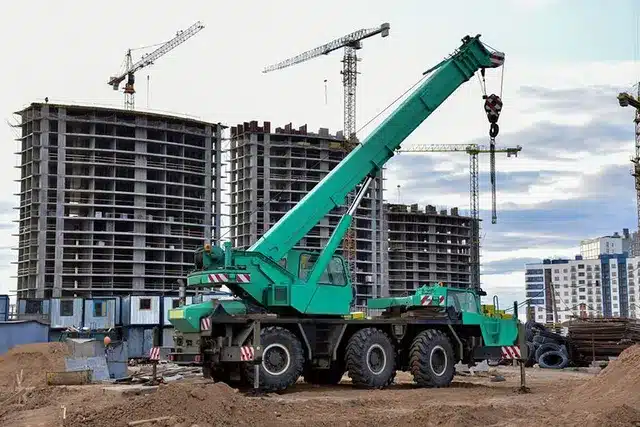
Rough terrain cranes, also known as “RT” cranes, are a type of mobile crane designed specifically for “off-roading” in challenging environments that may include mud, snow, etc. They are built with a strong chassis, large rubber tires, and powerful engines, allowing them to perform lifting operations in areas where standard cranes may struggle.
Why rough terrain cranes matter
A truck crane might struggle on a rough site. Rough terrain cranes are designed to handle it.
They also use outriggers for stability, which means setup still matters a lot. Rough terrain does not mean careless setup. It just means the crane is better suited for it.
Common places rough terrain cranes are used
You will often see them on:
- Industrial construction
- Utility projects
- Remote job sites
- Oil and gas work
- Large commercial builds with unfinished ground

All Terrain Cranes for Road and Jobsite Work?
All terrain cranes are like the “do a little bit of everything” cranes. They can travel on public roads, and they can also handle rougher job sites. They are not always the cheapest option, but they are often one of the most efficient.
Why all terrain cranes are popular?
They reduce downtime. Crews can drive the crane to the job and start working without needing a massive transport plan.
Where all terrain cranes fit best?
All terrain cranes are common on:
- Infrastructure projects
- Wind farm construction
- Large industrial sites
- Major commercial builds
They are especially useful when a project requires travel between sites.
Truck Mounted Cranes
Truck-mounted cranes are mounted on a truck chassis. They are built for speed and convenience. They are not always the biggest cranes on the site, but they are often the most practical. It is commonly used for Fast, Practical Lifts.
Why crews like truck mounted cranes?
They are quick to set up and easy to move. For many jobs, that is exactly what is needed.
Common uses for truck mounted cranes?
Truck mounted cranes are often used for:
- HVAC placement
- Light steel erection
- Utility work
- Sign installation
- Equipment loading and unloading
They are also common for short-duration jobs where the crane needs to work and leave fast.

Telescopic Boom Cranes
Telescopic boom cranes use a boom that extends and retracts like a telescope. Instead of assembling boom sections, the operator can extend the boom to match the lift.
Why telescopic booms are useful?
They allow quick adjustments. That makes them perfect for jobs where lift distances change often.Where telescopic cranes are common?
You will see them on:- Commercial construction
- Residential building
- Equipment installation
- Job sites with limited space
Crawler Cranes
Crawler cranes are a type of crane mounted on tracked undercarriages (similar to tank tracks) instead of wheels. These tracks allow the crane to move across rough, uneven, or soft ground while maintaining excellent stability, making them ideal for heavy-duty construction projects.
Why are crawler cranes trusted?
Crawler cranes spread weight across a large surface area. That helps with stability, especially on large projects.
They also move around the job site while assembled, which can be a huge advantage.
Common crawler crane projects
Crawler cranes are used for:
- Bridge construction
- Power plant builds
- Large industrial projects
- Heavy steel erection
- Major infrastructure work
Crawler cranes usually need transport to the job site. But once they are set up, they can handle serious work.

Lattice Boom Cranes
Lattice boom cranes are a type of crane that use a boom made of a lattice (crisscross steel) structure instead of a solid telescopic arm. This design makes the boom lighter, stronger, and more stable, allowing the crane to lift very heavy loads over long distances.
They are commonly used in large-scale construction, infrastructure, and heavy industrial projects where high lifting capacity is required.
Why lattice boom cranes are so strong
The lattice structure gives excellent strength without making the boom overly heavy. That helps with long reach and heavy loads. Lattice boom cranes are often chosen for lifts that require both reach and capacity.Where lattice boom cranes are used most
They are common on:- Heavy industrial construction
- Large infrastructure projects
- Wind turbine installation
- Bridge work
- Major steel erection jobs

A quick reality check:
Lattice boom cranes are not beginner friendly. They require careful planning, strong rigging knowledge, and clear communication. On a big lattice boom lift, small mistakes do not stay small.
Carry Deck Cranes
Carry deck cranes are compact, versatile, four-wheel-steer hydraulic cranes with a 360-degree rotating boom and a self-loading cargo deck, typically lifting 5 to 25 tons as they have a flat deck, and they can carry loads around the site.
Why are carry deck cranes useful?
They fit where larger cranes cannot. They are also helpful indoors, which is rare for many crane types.Where are carry deck cranes used?
Carry deck cranes are common in:- Industrial maintenance
- Indoor construction projects
- Tight commercial sites
- Equipment relocation

Hammerhead Tower Crane
A Hammerhead Tower Crane is a type of tower crane with a fixed horizontal jib (arm) that resembles the shape of a hammer—hence the name “hammerhead.” It is one of the most common cranes used in large construction projects, especially for building high-rise structures.
Why Hammerhead Tower Crane matter?
Hammerhead Tower Cranes play a crucial role in construction because they provide efficient, stable, and high-capacity lifting for large-scale projects.
One of the main reasons they matter is their fixed horizontal jib, which allows for smooth and precise load movement across a wide area. This makes them highly effective for handling materials like steel, concrete, and heavy equipment on construction sites.
Common uses for Hammerhead Tower Cranes?
- High-rise building construction
- Commercial and residential tower projects
- Large infrastructure projects (bridges, flyovers)
- Industrial construction sites

Level-Luffing Cranes
Overhead cranes are usually seen inside large facilities. They move along rails mounted high above the ground. Most people associate overhead cranes with factories, but they also support construction in fabrication yards and industrial facilities.
Why Level Luffing cranes matter?
Level luffing cranes are important because they allow the load to move in and out horizontally while staying at the same height. This is a big advantage on busy construction sites, as it reduces the need to constantly raise or lower the load during movement. As a result, operations become faster, smoother, and more precise.
Common uses for Level Luffing cranes?
- High-rise building construction
- Urban construction sites with limited space
- Bridge and infrastructure projects
- Shipyards and port operations
- Industrial plant installation
- Heavy equipment placement
Overhead Cranes
Overhead cranes are usually seen inside large facilities. They move along rails mounted high above the ground. Most people associate overhead cranes with factories, but they also support construction in fabrication yards and industrial facilities.
Why overhead cranes matter?
Overhead cranes are great for repetitive lifting. They reduce manual labor and speed up material handling.Common uses for overhead cranes?
- Steel fabrication
- Precast concrete yards
- Industrial manufacturing
- Warehouses and distribution centers

Gantry Cranes
Gantry cranes are a type of crane built with a bridge-like structure supported by legs, which move on wheels or rails. Unlike other cranes that are fixed or mounted on vehicles, gantry cranes operate on a framework that allows them to lift and move heavy loads horizontally within a defined area.
They are widely used in industrial environments where materials need to be lifted and transported across a workspace.
Where are gantry cranes common?
- Ports
- Shipyards
- Heavy manufacturing
- Bridge construction staging areas

Floating Cranes
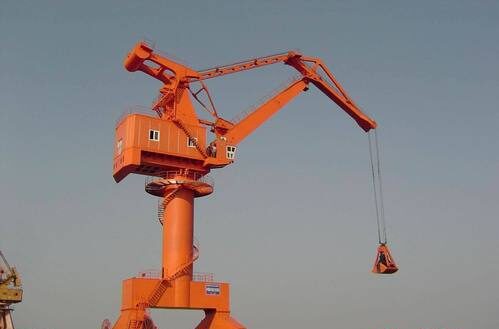
Floating cranes are specialized cranes mounted on barges or ships, designed to operate on water instead of land. They are mainly used for heavy lifting tasks in marine environments where traditional land-based cranes cannot operate.
These cranes are commonly found in ports, harbors, rivers, and offshore locations, and are essential for projects that involve water-based construction or transportation.
Why floating cranes exist?
Some jobs cannot be done from land. Marine construction requires equipment that works on water, and floating cranes fill that need.
What are the common uses for floating cranes?
- Dock and pier construction
- Bridge sections over water
- Marine salvage work
- Offshore equipment installation
Floating crane lifts require careful planning because water movement adds another layer of risk.

How to Choose the Right Crane for the Job
Crane selection is not just about lifting capacity. A crane can be strong enough and still be the wrong crane.
Crane selection depends on:
Load weight:
The first and most basic factor in crane selection is the weight of the load. You must know the exact weight of the material or equipment being lifted to ensure the crane has sufficient capacity. However, this is only the starting point, as a crane’s capacity changes depending on other conditions like distance and height.
Lift radius:
Lift radius refers to the horizontal distance between the crane and the load. This is one of the most critical factors because as the distance increases, the crane’s lifting capacity decreases significantly. A crane that can lift a certain weight at a short distance may not be able to lift the same load at a longer radius.
Lift height:
Lift height is the vertical distance the load needs to be raised. Higher lifts may require cranes with longer booms or additional extensions. In some cases, specialized cranes may be needed if the height requirement exceeds the capability of standard equipment.
Site access:
Site access involves evaluating whether the crane can reach the job location. Factors like narrow roads, tight turns, overhead obstacles, or restricted entry points can limit the type or size of crane that can be used.
Setup space:
Cranes require adequate space for proper setup, including extending outriggers for stability. If the site is congested or has limited space, it may restrict the use of larger cranes and require more compact or specialized equipment.
Ground conditions:
The condition of the ground is crucial for safe crane operation. Soft, uneven, or unstable ground can lead to tipping or imbalance. In such cases, additional support like crane mats or ground reinforcement may be necessary to ensure stability.
Weather:
Weather conditions, especially wind, play a major role in crane operations. Strong winds can cause loads to sway, making lifting dangerous. Rain and other weather factors can also affect visibility and ground stability, impacting overall safety.
Project duration:
The length of the project helps determine the most cost-effective crane type. For short-term jobs, mobile cranes are usually preferred, while long-term projects may justify the use of more permanent solutions like tower cranes.
Frequency of lifts:
The number of lifts required also affects crane selection. For occasional lifts, a simple setup may be enough. However, for frequent or repetitive lifting tasks, efficiency becomes important, and choosing a crane that can operate quickly and consistently is essential.
Bottom Line
Construction uses many crane types because construction problems come in many shapes. Mobile cranes handle daily lifts. Tower cranes dominate high rises. Rough terrain cranes tackle messy ground. All terrain cranes travel and lift. Crawler cranes bring stability and heavy lifting power. Lattice boom cranes handle serious reach and serious weight. Carry deck cranes fit tight spaces. Gantry and overhead cranes handle material movement. Floating cranes support marine work.
Knowing crane types is useful for new operators, project managers, safety teams, and company owners. It helps with planning, budgeting, and safer job execution. It also helps people choose the right training path.
At Crane Training Academy, we focus on real world skills that carry into real job sites. We train people to operate with confidence, communicate clearly, and respect the planning side of lifting. If you are ready to build your crane career or tighten safety standards for your crew, reach out to us. We will help you choose the right direction.
FAQs
Which crane type causes the most surprise problems on job sites?
Mobile cranes often cause the most surprises, mainly because people treat them like routine equipment. Crews see them so often that planning can get rushed, and small details get skipped. The crane itself is not the issue. The issue is how quickly people assume the lift is simple, even when conditions on the site have changed.
Which crane type is easiest to start on, but hardest to master?
Many operators start with telescopic boom cranes because they are common and widely used. Learning the controls can happen fairly quickly, but mastery takes time. Real mastery means reading load charts correctly, handling wind safely, controlling swing smoothly, and communicating with a crew under pressure. Those skills take experience and good training, not just seat time.
Why do crane setups still go wrong even with experienced crews?
Setup changes from job to job. Ground conditions, slope, space limitations, and crane configuration all affect stability. A crew can have years of experience and still get caught off guard by soft soil, hidden voids, or poor mat placement. Many setup mistakes happen because people rely on habit instead of checking the conditions directly in front of them.
What is the one crane related skill that improves every lift?
Clear communication improves every lift, no matter what crane is being used. A great operator can still be put at risk if the signal person is unclear or if too many people are trying to direct the lift. The best crews keep it simple. One signal person, one plan, and a stop signal that everyone respects.
What is the smartest way to get crane training without wasting time or money?
The smartest approach is choosing training that focuses on real jobsite expectations, not only exam preparation. Passing matters, but real success comes from lift planning, safe rigging habits, and calm decision making under pressure. If you want help choosing the right training path for your goals, contact us at Crane Training Academy. We can point you toward training that matches the type of crane work you want to do.